In modern industrial applications, fiber optics are no longer valued solely for their high data transmission rates. Instead, they are increasingly appreciated for their electromagnetic immunity and future-proof reliability in digitalized processes. While optical fibers (LWL) were once primarily used in data centers or climate-controlled indoor areas, specialized components today allow for reliable operation even under extreme conditions—so-called “harsh environments.”
With the advancement of Industry 4.0, the integration of 5G communication infrastructure, and the trend toward intelligent networking down to the most remote corners of industrial facilities, the demands on physical infrastructure are rising rapidly. Especially in sectors such as mechanical and plant engineering, petrochemicals, energy, and maritime industries, robust, individually configurable fiber optic solutions are required, solutions that can withstand mechanical stress, climatic extremes, and chemical exposure.
Project Planning: The Key Lies in Individual Design
The requirements for optical fiber systems in harsh environments are complex—standard solutions quickly reach their limits here. Professional project planning therefore begins with a comprehensive needs analysis that considers both environmental conditions and technical requirements. Criteria such as existing cabling, fiber type, number of fibers, installation situation, required bending radius, and mechanical loads deserve special attention.
While multimode fibers are suitable for short to medium distances with high data rates, single-mode fibers offer the advantage of low-loss transmission over several kilometers—often crucial in large industrial areas. Depending on the application, varying fiber counts may be necessary, e.g., for redundant systems, sensor connections, or combined data and control lines. In confined installations—such as vehicles or machines—bend-insensitive fibers compliant with ITU-T G.657.A1/A2 are often the first choice today. In addition, temperature ranges, humidity, UV exposure, chemical vapors, pressure, or mechanical stress significantly influence material selection. Close coordination with specialized system providers such as LWL-Sachsenkabel GmbH makes it possible to develop solutions precisely tailored to each scenario.
Cable Sheath Materials in Focus
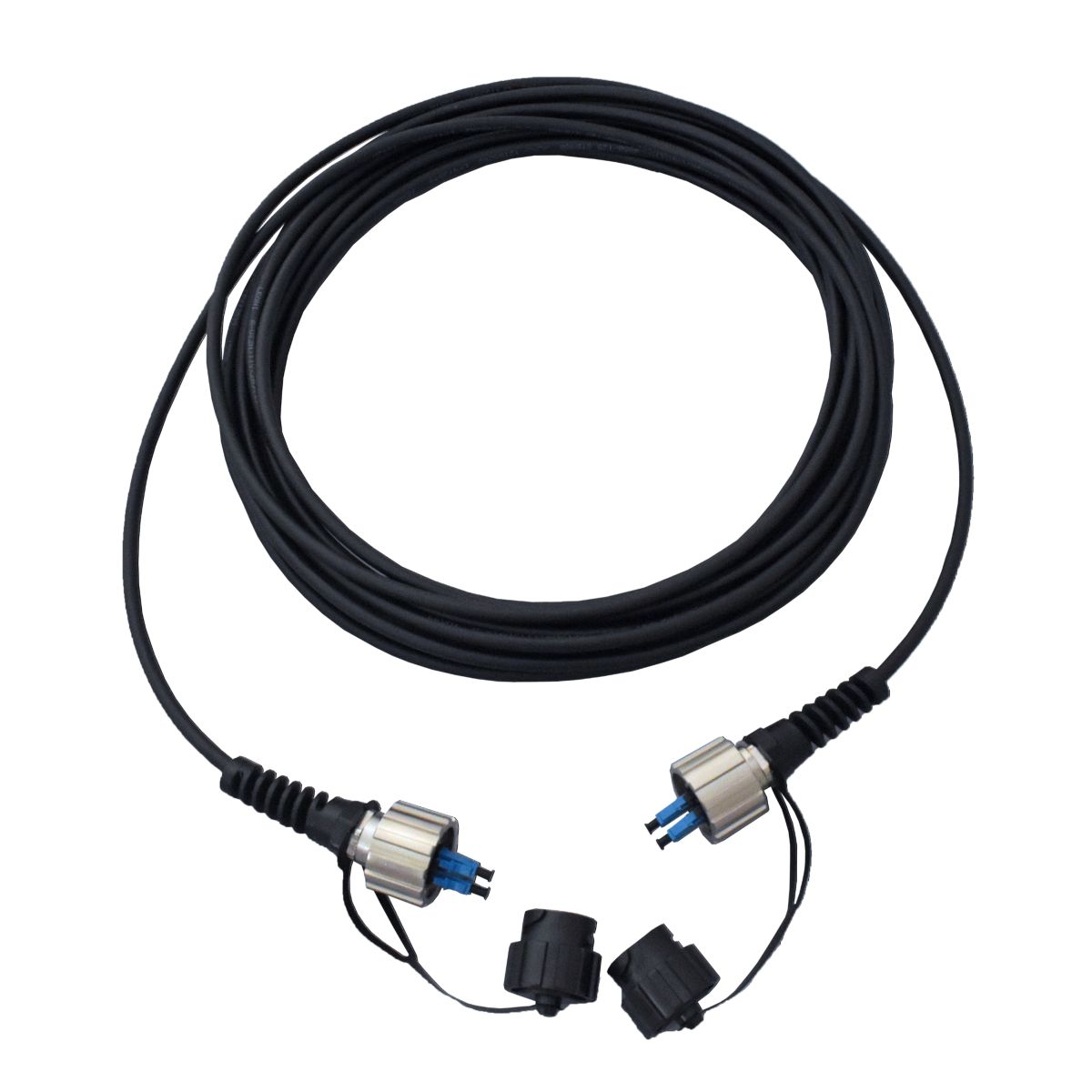
Selecting the right cable sheath is crucial for the longevity of the fiber optic infrastructure. Modern cable assemblies rely on carefully matched material combinations that combine protection, flexibility, and ease of handling. Typical materials and their applications include:
- Polyethylene (PE): Highly resistant to moisture, UV radiation, and mechanical stress—ideal for permanent outdoor use (e.g., wind turbines).
FRNC (Flame Retardant Non-Corrosive) sheaths, based on special PE compounds, are halogen-free, self-extinguishing, and resistant to chemicals and acids—perfect for chemical plants, tunnels, or indoor use. - Polyurethane (PUR): Highly abrasion- and cut-resistant yet flexible—predestined for mobile applications or industrial robotics.
- PVC (Polyvinyl Chloride): Cost-effective and chemically stable, commonly used for temporary installations.
- Hybrid sheath architectures: Combine inner and outer jackets with different material properties, optimized through modern manufacturing techniques for specific applications.
Additional features such as rodent protection, pressure resistance, or fire protection (per EN 45545 or IEC 60332-3-24) can also be integrated if needed.
The Inner Core: Glass or Plastic?
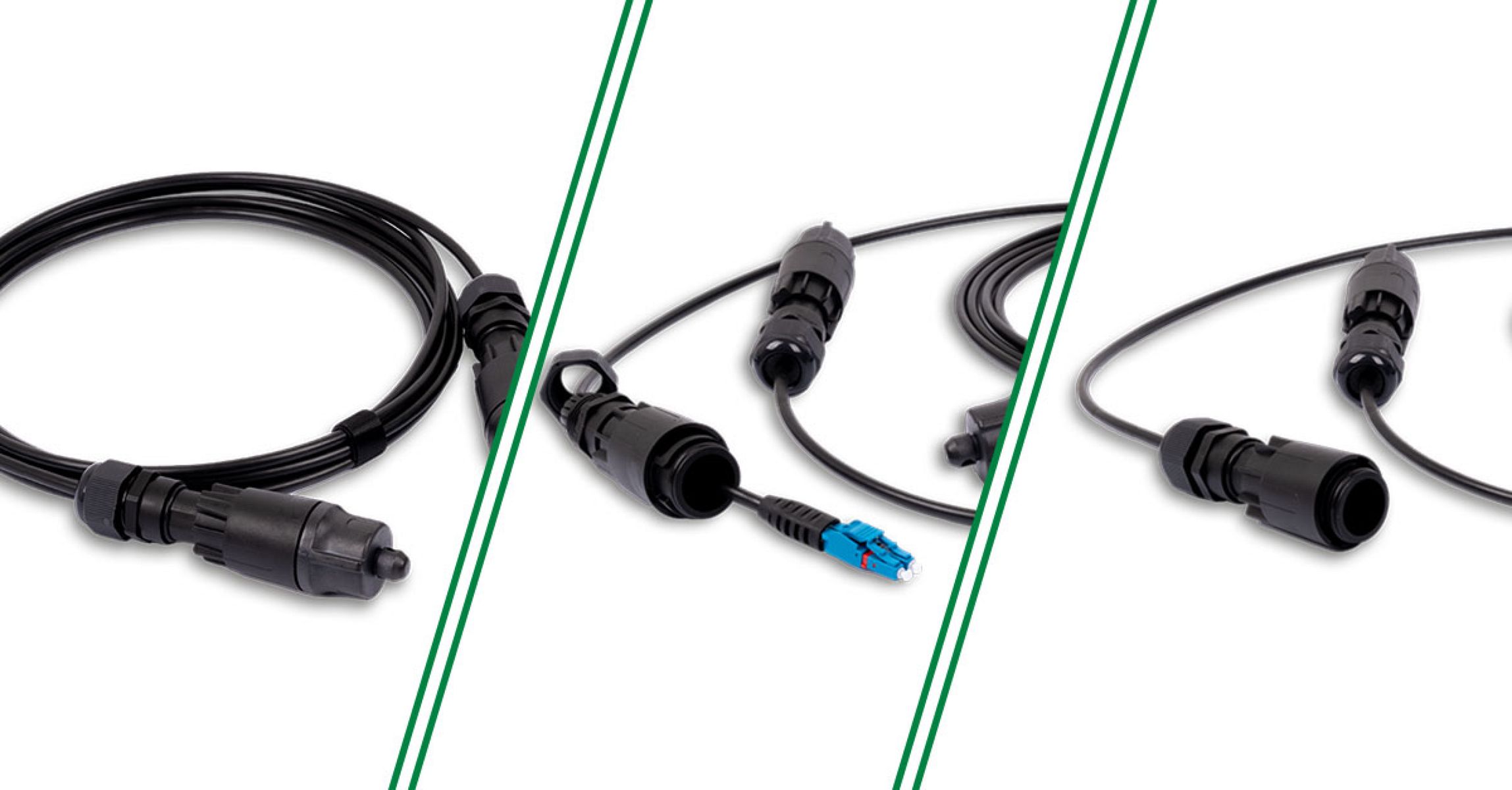
Beyond the outer sheath, the fiber material itself also affects the cable’s robustness. Instead of standard glass fibers, optical fibers made from materials such as POF (Plastic Optical Fiber) or HCS (Hard Clad Silica) can be used for greater durability over short and medium distances.
POF, with its plastic core, is extremely flexible, shock-resistant, and inexpensive—but has lower transmission performance and is limited to short distances. HCS, consisting of a silica core with a plastic cladding, offers higher performance than POF and sits between POF and glass fiber in terms of flexibility, durability, and cost.
For long distances or very high-performance demands, however, glass fiber remains indispensable despite being mechanically less resilient.
Connector Technologies: The Critical Interface
Connectors are the neuralgic points of any fiber optic connection—especially in environments exposed to vibration, dirt, moisture, or frequent plugging cycles. Two main types can be distinguished:
1. Physical Contact Connectors (PC):
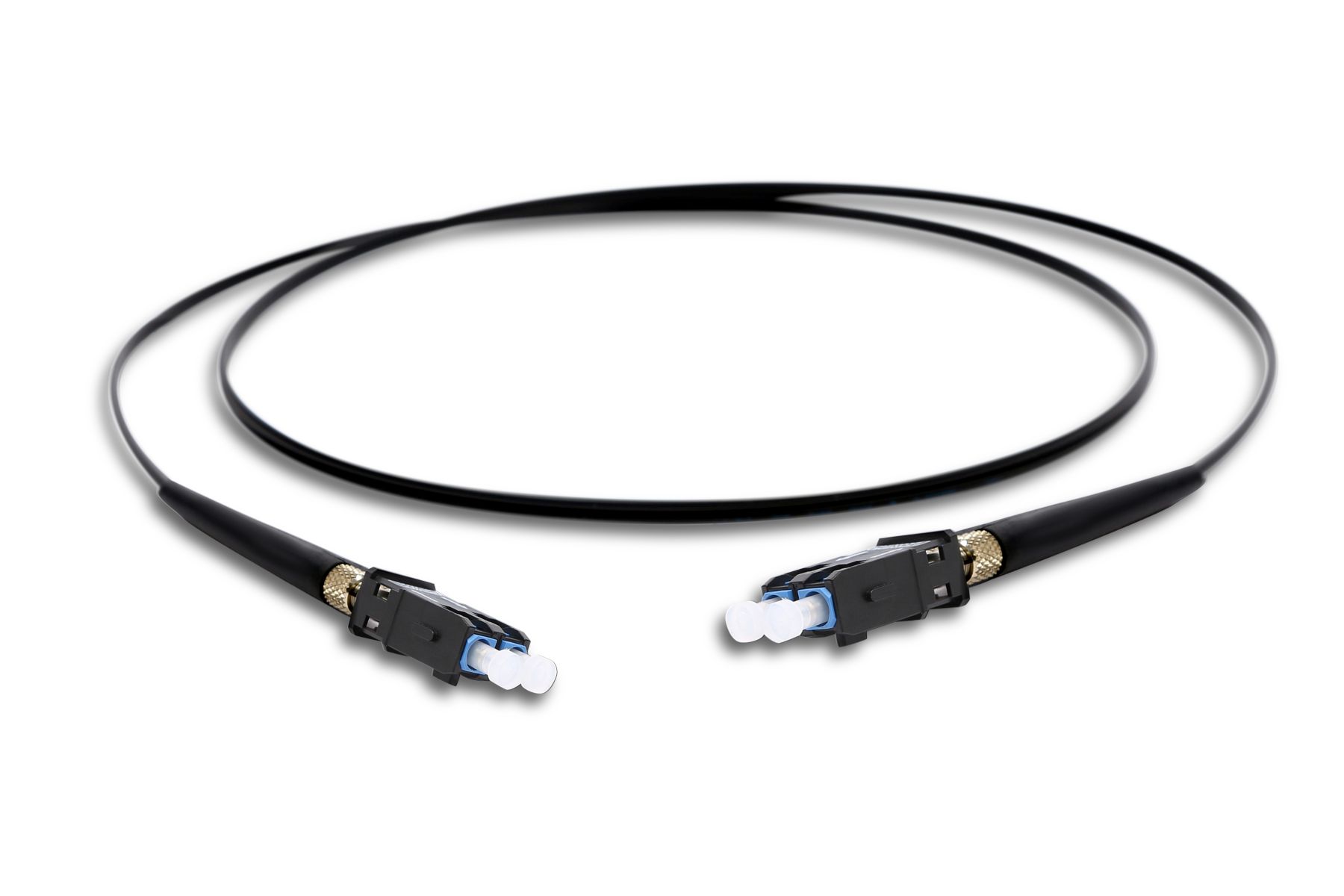
These create direct contact between fiber ends, enabling very low attenuation values (<0.2 dB for multimode, ~0.12 dB for singlemode)—essential for low-loss applications such as 5G small cells or high-speed networks. Common examples include LC, SC, FC, and ST, as well as specialized variants like Fischer FO2, QFOCA, or Harting HAN. New developments like Senko’s Waterproof LC (IP68-rated) even allow underwater use without an external housing.
Protective Housings – IP-Rated Safety
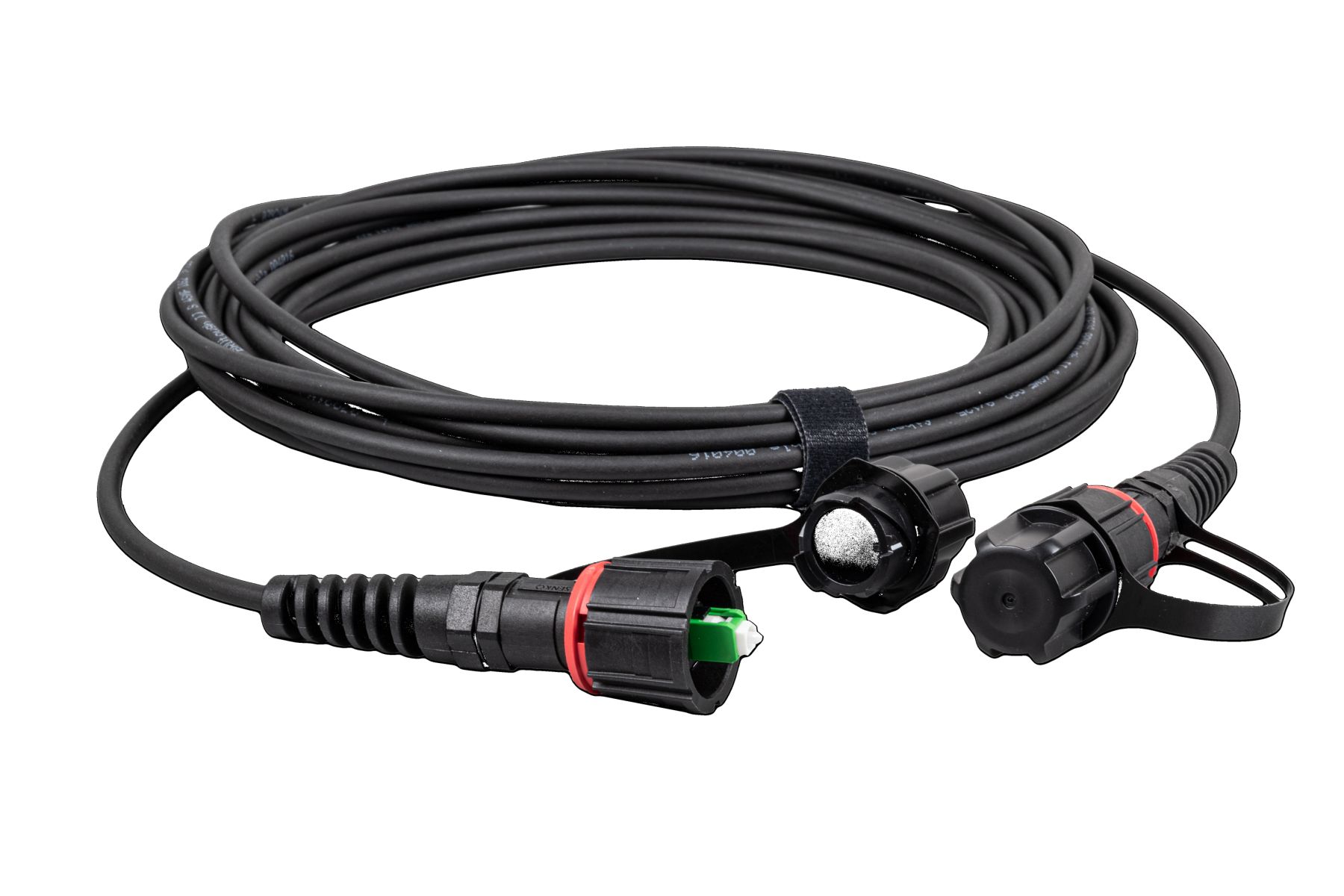
When low attenuation is required even in dusty or wet environments, PC connectors can be equipped with additional IP-rated housings (IP55, IP67, IP68), providing protection against dust, jets of water, or full submersion. Products from manufacturers like Senko Advanced Components and US Conec allow for modular integration of various connector types.
2. Expanded Beam Connectors (Lens-Type):
These use a lens-based, contactless transmission—ideal for dirty or dusty environments such as mining, offshore installations, broadcasting, or military/marine use.
- Advantages: extreme robustness, easy maintenance, and simple cleaning.
- Disadvantages: higher attenuation (1.5–2.5 dB), larger size, and higher cost.
The right choice depends on balancing attenuation requirements, maintenance intensity, and environmental factors.
Specialized Connections for Rotating Components: Fiber Optic Rotary Joints
A rotary joint transfers signals between a stationary and a rotating part of a machine—essential in applications like robotics or cranes. Sensors and cameras on rotating components must communicate in real time with central control systems, requiring high data rates only achievable through fiber optics. To ensure smooth transmission across 360° motion, custom-assembled fiber optic rotary joints are used. Sachsenkabel collaborates with a manufacturer of a patented rotary joint solution and, due to its high degree of customization, is the only provider capable of configuring the fiber assembly of these components according to individual requirements.
Industry 4.0 Demands Increasingly Customized Cabling Solutions
Fiber optic technologies have evolved far beyond their original use in clean, protected environments. As a result, even rugged industrial sectors can now benefit from their speed and bandwidth. In modern Industry 4.0 production systems, fiber optics are indispensable for machine communication. However, such applications require extensive customization and a wide range of connector and cable types—something only system providers like Sachsenkabel can offer from a single source. LWL-Sachsenkabel GmbH supports companies throughout the entire project cycle—from technical consulting to manufacturing and on-site installation—creating solutions that are not only functionally convincing but also economically and ecologically sustainable.