
Always at the Cutting Edge
How can even the smallest sensors communicate intelligently? For almost 20 years, IO-Link has provided compelling answers. The recipe for success: simple application combined with innovation.
 For years, IO-Link has impressed with its robustness, and is primarily used for sensors with limited space, low energy consumption, and low data volumes. Specialized installation expertise, such as EMC compatibility or wiring as required for analog measurement technology, is not necessary. The range of IO-Link sensors is growing daily, extending from simple inductive sensors to highly complex camera systems. Additional features include wireless functionality and improved security characteristics, which provide greater flexibility, functional safety, and thus efficiency. Thanks to microcontrollers, IO-Link sensors now process measured values directly, filter out interference, and are increasingly tailored to their specific applications.
First Security Guideline Available
IO-Link is currently being analyzed from a security perspective. Until now, the risk of attacks has been low for classic, wired applications, but the attack surface changes, for example, with wireless applications. Targeted security strategies must be developed for these. A first step is the Deployment Guide, which provides practical explanations of how to securely integrate IO-Link into machines. The guide offers detailed instructions and best practices for using secure IO-Link systems. In addition, the IO-Link Secure Design and Development Guideline is currently being developed. This guide is aimed at technology and device manufacturers involved in the design and development of IO-Link products. It offers comprehensive guidance for understanding security measures and integrating them into IO-Link products.
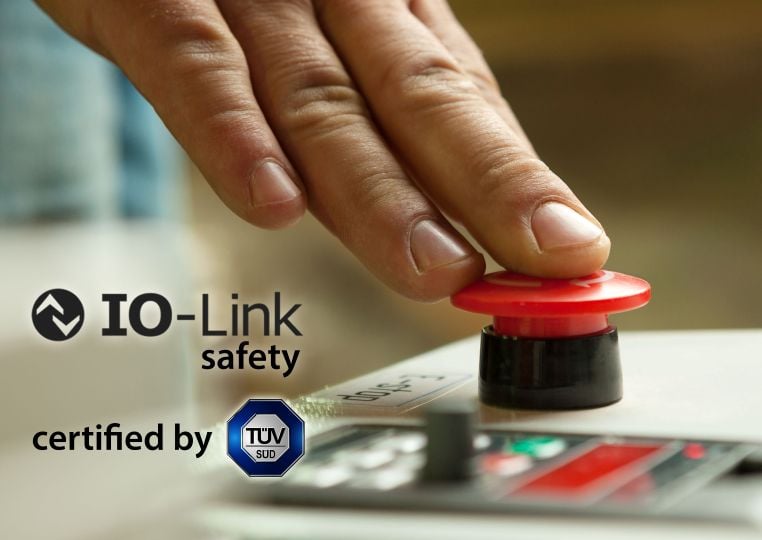
Furthermore, IO-Link Safety now enables seamless integration into existing automation and safety structures. TÜV SÜD recently successfully tested and officially certified the IO-Link Safety Specification V1.1.4. This certification by an independent testing body marks the completion of the IO-Link Safety development phase. Unlike conventional IO-Link, IO-Link Safety relies on third-party certification. Manufacturers must have their products tested at an approved test center – an additional step to ensure the highest quality and safety standards. TÜV SÜD, the first officially designated IO-Link Safety test center, has already begun testing IO-Link Safety masters and devices. The first certified products are now available on the market.
Knowing When and Where
The enrichment of data with precise time information was another planned extension of the transmission technology. With timestamps, sensor signals can be synchronized with actuator responses with high accuracy, independent of cycle times. This is used, for example, in the furniture industry for the precise, very fast joining of panels and edge banding with a positional accuracy of 1 millimeter. Another example is the correlated evaluation of measurement data from machine parts via multi-channel, time-synchronous acquisition of vibration or acceleration data.
These examples demonstrate the technological openness and enthusiasm for innovation within the IO-Link community. For all new developments, the user and the straightforward use of simple sensors remain central to all future innovations.
 Frank Moritz, SICK AG