
How an omlox Hub Turns Location Data into Operational Intelligence
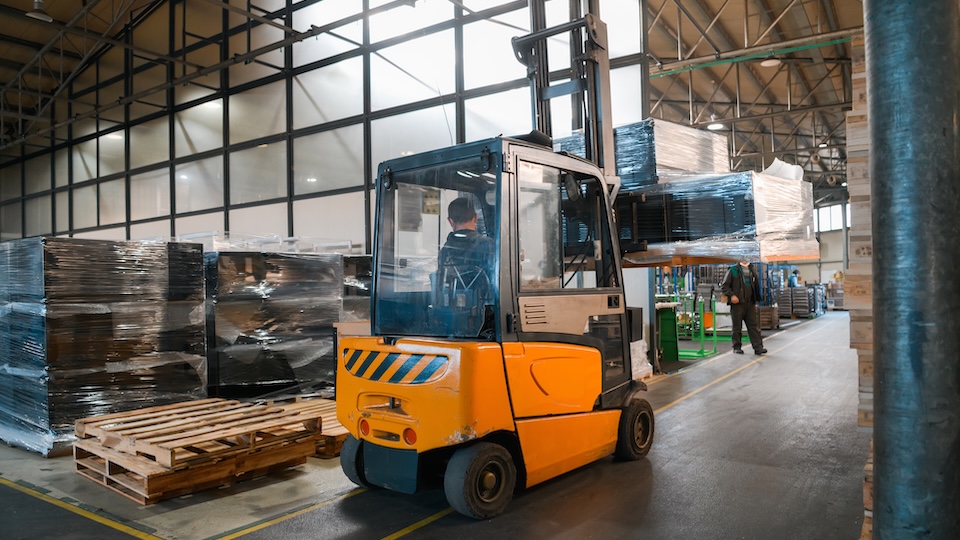
Forklifts move constantly — but their data rarely does. Most fleets are still managed on instinct: idle time goes unnoticed, actual routes are never compared to planned ones, and safety hotspots only surface after an incident. Flowcate’s new Forklift Analytics solution closes that gap, and it does so based on the omlox standard.
How it works
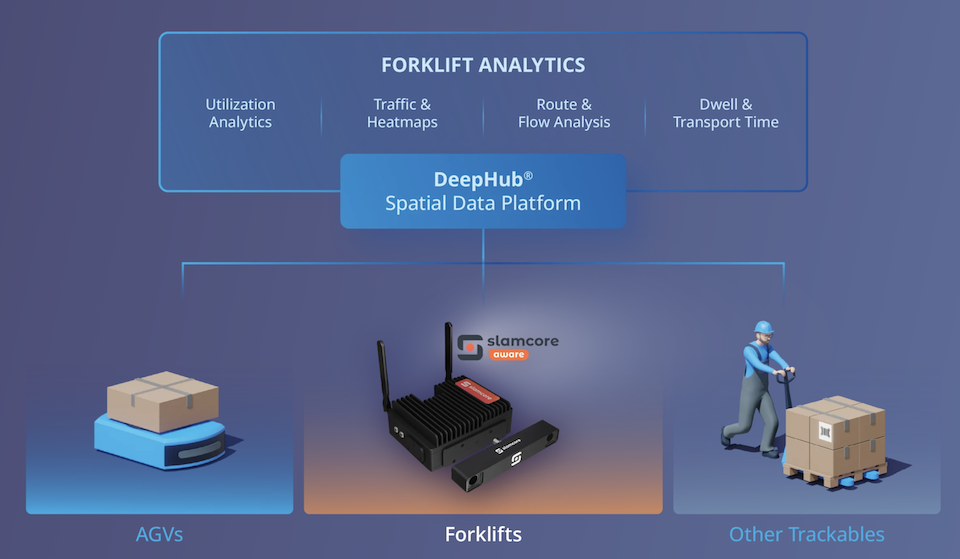
Slamcore’s camera-based Visual SLAM modules mount directly on each forklift — no beacons, no anchors, no infrastructure retrofit. They deliver centimetre-level position data from day one. That data flows into DeepHub®, Flowcate’s spatial intelligence platform, which normalizes it and streams it into real-time dashboards covering fleet utilization, traffic heatmaps, route and dwell-time analysis, and safety intelligence such as near-miss detection.
Why the omlox hub matters
At the core of DeepHub® sits an omlox hub — the vendor-neutral location-tracking middleware defined by the omlox standard. This is what elevates the solution beyond a single-purpose forklift tool. Because DeepHub® is fully omlox-certified, any positioning technology and any hardware vendor can be integrated and made interoperable out of the box, whether that’s Visual SLAM, UWB, RTLS tags, or other locating systems already in use on-site.
For customers, this means Forklift Analytics is not a dead end. The same spatial layer that tracks forklifts today can be extended tomorrow to AGVs, AMRs, pallets, and general goods movement — building toward one unified operational picture. And because the omlox hub abstracts positioning technology from the applications consuming it, location data can feed directly into automation and MES/ERP systems, supporting end-to-end visibility along the entire supply chain rather than isolated point solutions.
The takeaway for the PI community
Forklift Analytics is a practical example of what standards-based interoperability enables in the field: a fast, infrastructure-light entry point (mount-and-go, actionable insights from day one) that scales into a comprehensive, multi-vendor location data strategy — without locking customers into a single technology or provider.