
How users can exploit the full potential of smart sensors
IO-Link has much more to offer than the well-known benefits. This Technical Report uses 5 practical examples to show how users can make the most of digital interface benefits. Even beginners with no prior knowledge can integrate IO-Link devices into the PLC after just 80 minutes thanks to the tutorial linked further down.
With IO-Link, machine designers and plant operators hold the key to the digital factory in their hands. But not everyone knows and exploits the full smart technology potential of IO-Link. It offers more than just easy parameterization and quick sensor replacement. With five examples taken from the daily routine of machine builders and plant operators, this Technical Report will show how users can benefit from IO-Link to speed up engineering and optimize maintenance intervals. The focus is a fast IO-Link all-in-one package allowing for high-speed data transmission from sensors to PLCs.
Example 1: IO-Link Finally Available for Packaging
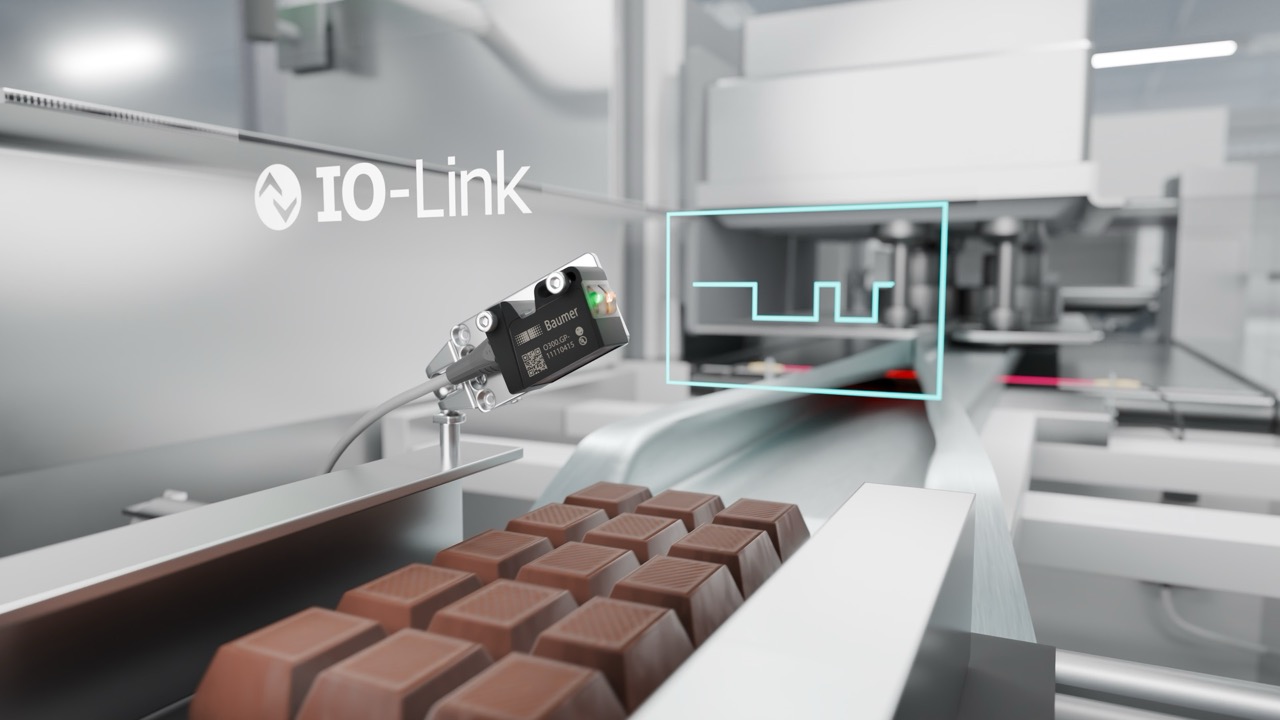
Previously, IO-Link was inappropriate for applications with very short response time. An example of very dynamic applications are packaging machines that require very high transmission speeds. Packaging machines are designed for high speed since the motto “time is money” here is even more important than in other fields of automation. The faster the belt is running “trouble-free” in operation, the greater the cost-efficiency for the plant operator. The emphasis is on “trouble-free”, since in packaging there exists the highest demands on system uptime. For example, if the belt stops during packaging of pre-processed fresh fish, often the entire batch must be disposed of and the packaging installation must be cleaned. Such expensive scenarios must be avoided. Therefore, knowing about machine shutdowns weeks in advance is something plant operators dream of. With this knowledge, maintenance could be perfectly timed – not unnecessarily often, but well in advance before a shutdown – for example, during the maintenance shift on Sunday.
Though fast IO-Link can supply required secondary data, transmission of the system’s primary data to the PLC would not be fast enough. The bottleneck was the IO-Link master. It used to be too slow for the fast transmission of primary data. Root causes are PLC cycle times of 4 ms or less in packaging installations. Conventional inputs (analog and switching) are fast enough, but IO-Link used to be significantly slower, often >10 ms.
Those days are long gone. Sensors featuring <1 ms cycle time and the correspondingly supporting IO-Link masters are available. For this reason, now all IO-Link benefits can be used in one of the fastest machine types on the market: packaging machines. In terms of speed, IO-Link connections are no longer slower than conventional ones. And on top of it all: thanks to the secondary data channel, sensors can report on contamination, alignment issues, or excess temperatures at an early stage.
Example 2: Condition Monitoring for Predictive Maintenance
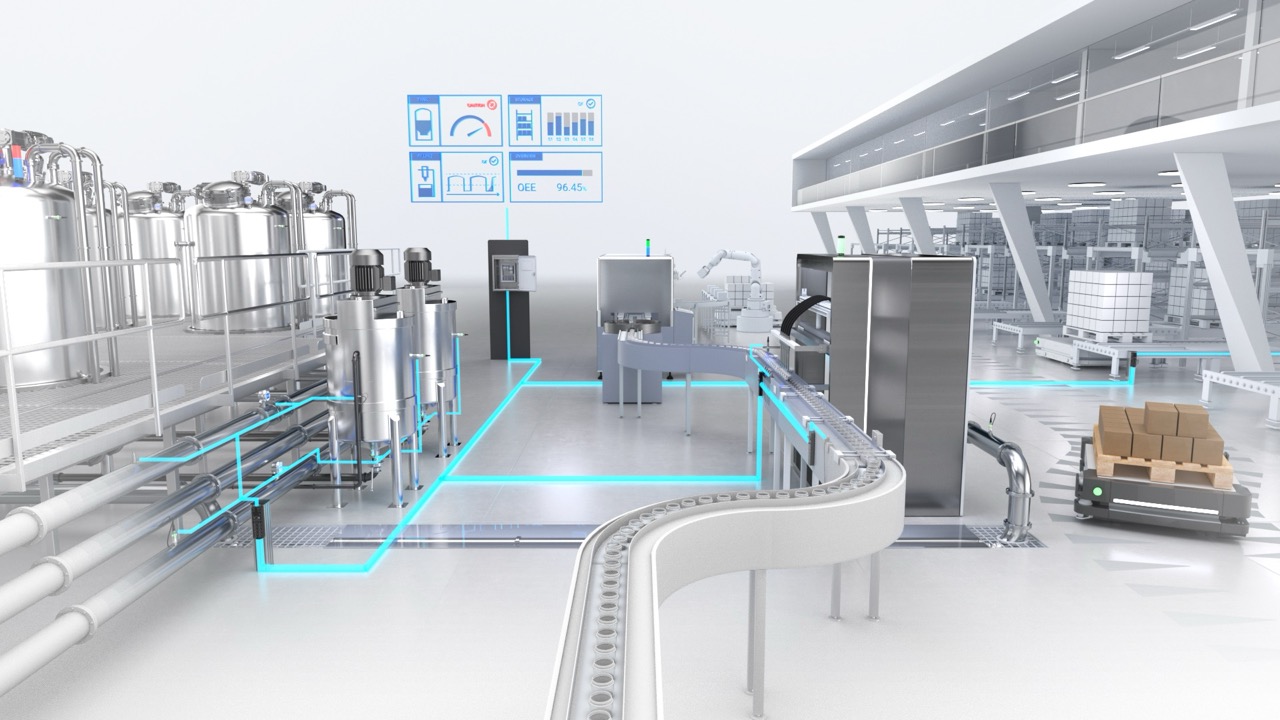
The use of secondary data is already being realized by Baumer for packaging machines. Optical sensors from Baumer can report whether their reflected light is still sufficient for correct measuring or switching operations. This way, the sensor can “see” when the glass is contaminated or it is no longer correctly aligned. Other useful sensor data for predictive maintenance include temperature, vibration, overload (force and pressure), power consumption, or service life.
Example 3: Speed up Engineering
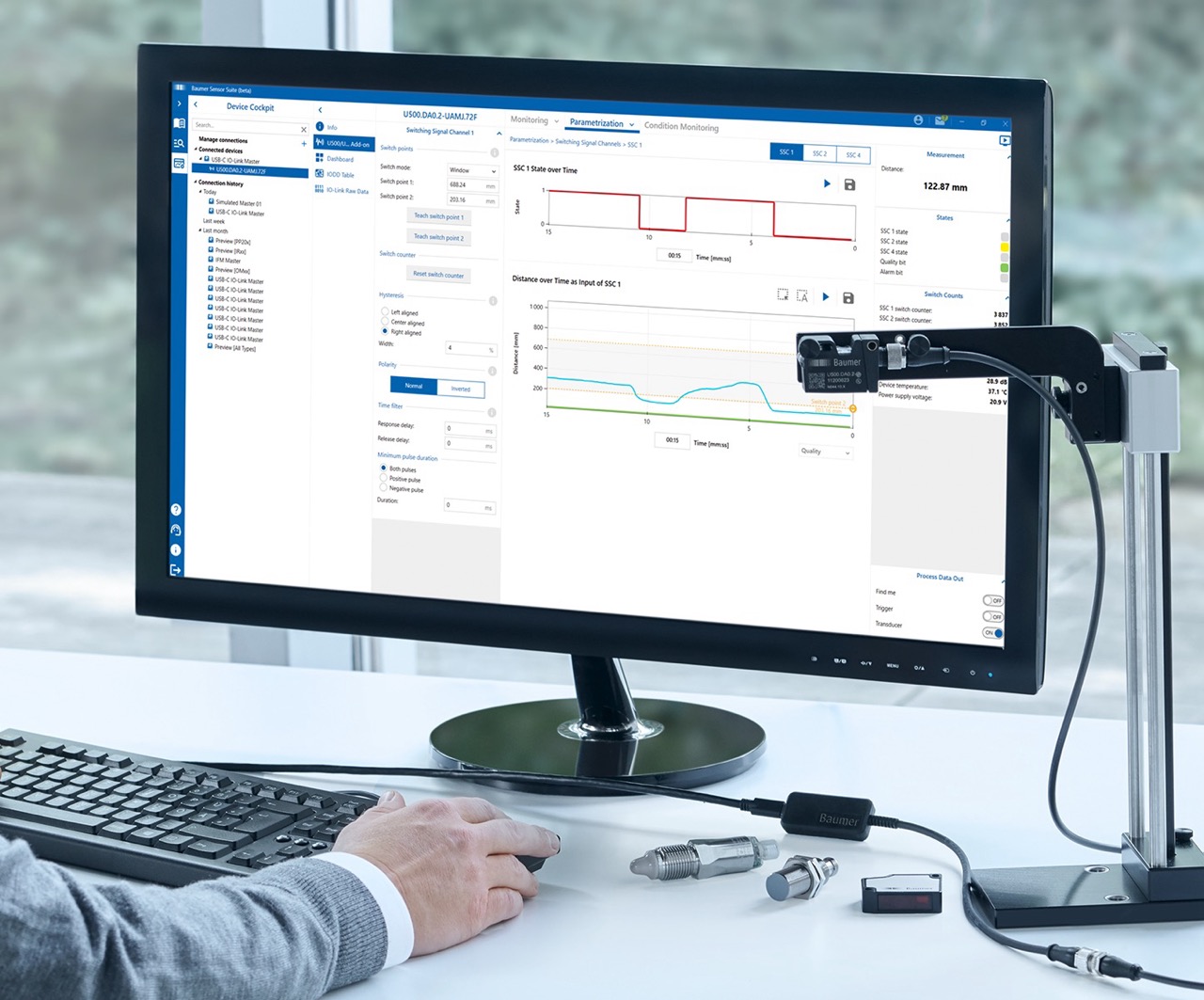
A freeware software called the Baumer Sensor Suite is available. The tool helps with the evaluation, parameterization and use of IO-Link sensors and actuators. One example includes the SSC (Switching Signal Channel) setting of measuring sensors or the sonic cone definition of ultrasonic sensors. The tool communicates with all available IO-Link devices via IO-Link masters –including those from other manufacturers. A compact USB-C IO-Link master from Baumer is also available with no need for an additional power supply. The USB-C IO-Link master links a sensor and a PC: on the desk, during machine commissioning or in the event of service.
Example 4: IO-Link Uses Standard Cabling
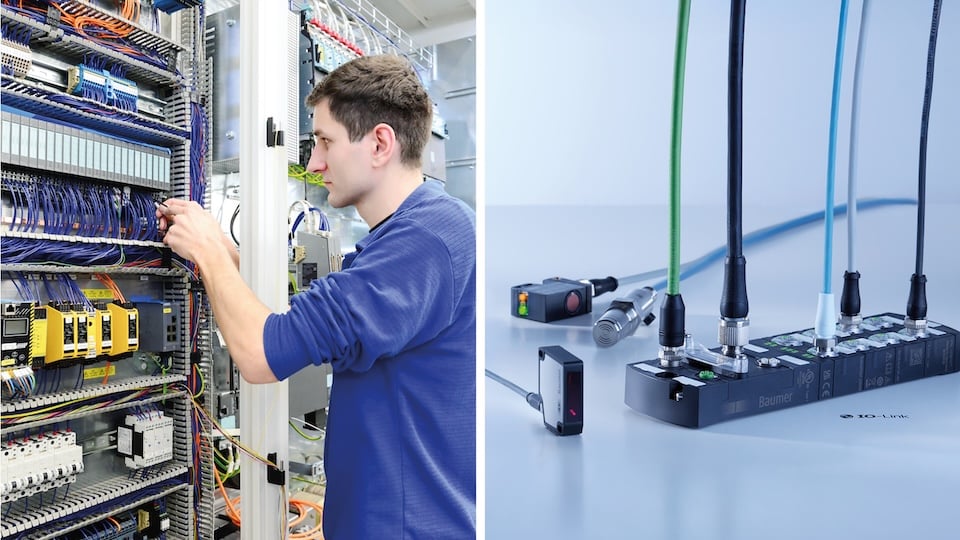
Another remarkable IO-Link benefit is its simplified wiring. This means reduced cost, time savings in installation and eliminating sources of error. How does this work? First, standardized and simplified wiring prevents errors and speeds up commissioning. Further, IO-Link cuts down on the costs of cabling material. Unlike bus systems, low-cost, unshielded standard cables suffice for data transmission (maximum cable length = 20 meters). There is no need for an analog input card, thanks to IO-Link master interposition in the field. This reduces cable lengths, since wiring is only required up to the IO-Link master and no longer up to the control cabinet. Via M12 connector, the master can be connected in a few minutes, while control cabinet wiring would otherwise take hours. A Baumer example machine calculation came to an interesting conclusion: The IO-Link master already pays off when being equipped with just two to three measuring sensors. Just the competitive advantage by simplified wiring convinced experts to forecast: Those who won’t rely on IO-Link will be left behind in the upcoming years.
Example 5: Becoming an IO-Link Expert
However, the above benefits have their price. And this is: increased complexity. Compared to classic switching and analog signals, IO-Link with all its potential is more complex. But solutions exist to make access to the technology easier and enable getting started quickly. One solution is the aforementioned Baumer Sensor Suite. Two Baumer How-To tutorials explain PLC integration step by step in only 80 minutes: from IO-Link master setup all the way to the integration of cyclic and acyclic data. With this starter guide on YouTube, anyone can become an IO-Link expert – within the time of a feature film length: www.youtube.com/watch?v=qwM5rzrY4Wo.
Conclusion: IO-Link is the Entry Ticket for the Automation of Tomorrow
IO-Link holds great potential for smart automation. By example, Baumer offers high-speed applications, enabling users to fully exploit this potential and hence secure a competitive edge. These respond to the wish of many plant operators and maintenance technicians for predictive maintenance in packaging. From sensor to IO-Link master, onwards to the PLC and higher-level IT systems –the right cabling ensures perfect interaction. This simplifies engineering and enables data speeds that allow for IO-Link applications in highly dynamic installations. Finally, easy access to practical IO-Link instruction is available and time-efficient thanks to 80-minutes video tutorials with step-by-step explanations.